
"coffee exports Angola"
300 article(s) found
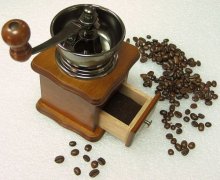
Introduction to the types and origin of coffee beans
Coffee beans are washed and dried, flat beans and round beans. The coffee beans are dark and light in color. Through deep roasting, the coffee beans explode, doubling in volume and reducing their weight by nearly 1 inch 4.

Where did Brazilian coffee come from? introduction to the history and culture of development.
In 1657, an English newspaper reported that coffee has many effects on gastric ulcers, can strengthen the heart, promote digestion, lift spirits, relax the mood, treat eye diseases, colds, coughs, lung diseases, headaches, edema, gout, scurvy, adenosis, and other diseases. Coffee is sometimes described as an elixir of immortality, and sometimes it is regarded as poison, because some people suffer from coffee discomfort, such as insomnia and anger
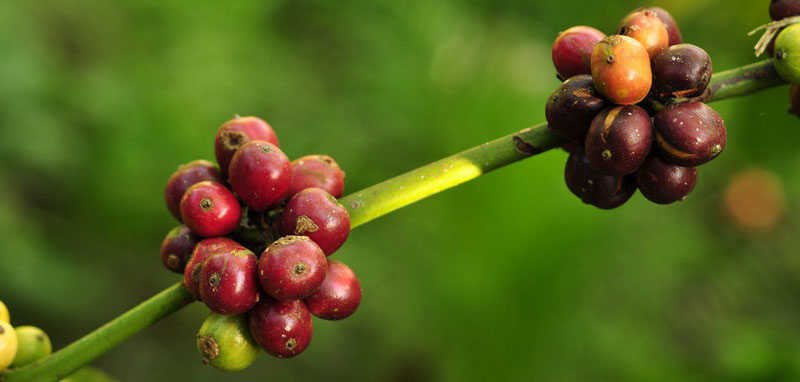
Introduction to Coffee-exploring the color and aroma of coffee beans from the root
[cultivation of coffee trees] Coffee trees are evergreen shrubs of the Akanaceae family and belong to the Rubiaceae family in plant taxonomy. Since ancient times, most of the plants of the family Rubiaceae have special effects, such as quinine, which is regarded as a specific drug for malaria. and Dugan for the treatment of amoeba dysentery. Native to Abyssinia in East Africa, it is now mainly concentrated in the tropical zone or subtropics of America, Africa, and Asia.

What coffee varieties are mainly grown in Ivorian coffee? Robusta coffee grown in C ô te d'Ivoire
Professional coffee knowledge exchange more coffee bean information please follow the coffee workshop (Wechat official account cafe_style) what coffee varieties are mainly grown in Ivorian coffee? What are the advantages of robusta coffee grown in C ô te d'Ivoire? Arabica coffee beans are mainly produced in South America (except parts of Argentina and Brazil), Central America, Africa (Kenya, Ethiopia and Russia).

The origin and history of coffee
Raj, an Arab doctor in the tenth century, wrote the earliest written records about coffee, but the cultivation of coffee dates back to 575 AD. Arabica, the best variety of coffee, came from Ethiopia. In the fifteenth century, southern Arabs in Yemen began to plant saplings from Ethiopia.

Introduction to the flavor description and taste characteristics of Burundian red bourbon coffee beans
Burundian Red Bourbon Coffee Bean Flavor description Variety producing area introduction the output of Robusta species accounts for 25% 35% of coffee bean production, its main producing country is Indonesia (one of its coffee beans is a kind of coffee bean processed by washing method, it is a hybrid variety of Robbsta species and Arabica species, and it is the only coffee bean that can be used as a single product in the Chinese market.
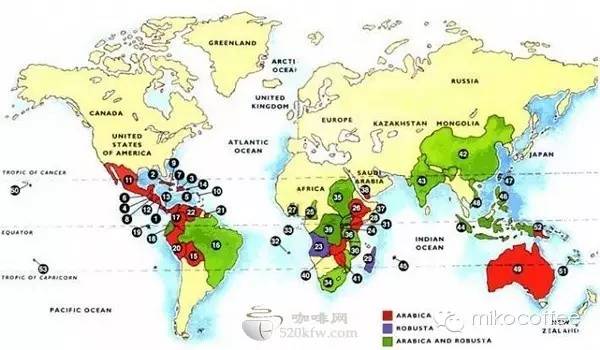
World boutique Coffee beans: the first introduction to Coffee from 53 Coffee producing areas in the World (to be continued)
one. Costa Rican coffee has full grains, ideal acidity and unique strong aroma. Tarrazu of Costa Rica is one of the major coffee producing areas in the world. Costa Rica, with its fertile volcanic soil and good drainage, is the first country in Central America to grow coffee and bananas for commercial value. Coffee and fragrance

How do coffee beans taste? Rwanda & #160; knowledge of Red bourbon Coffee
. Rich in nutrients, some with nutty flavor. It is often described as having a silky taste. Of all the coffee, it has the best balance, soft and smooth taste, and can be drunk at any time. The most important producing area in Colombia is abbreviated as MAM (the initials of Medellin, Armenia and Manizales), and most of Colombia's top coffee for export

Description of Flavor of African Coffee Bean Variety treatment method in Taste producing area
Description of flavor of African coffee bean varieties in taste producing areas introduction to Catuai: a hybrid of Kaddura and Mondonovu, the reason for hybridization is that the Mondonova tree is too high, so it crosses with Kaddura of tree height. Kaduai has high yield and strong adaptability to the environment. But the harvest life is short, the taste is monotonous and lacks the thickness of alcohol. Amareo (Amarello):

Introduction to the quality characteristics of Burundian Brocasta coffee bean flavor description treatment
Coffee tree evergreen leaves, the leaf tip is more pointed, and is two opposite groups. The surface of the leaf is dark green, the back is light green, and the blooming flower is pure white. There are five stamens and one pistil in the flower, and the petals are usually five, but some have six or even eight petals. The flowers will give off a jasmine-like fragrance, but the flowers will wither in about three or four days. The fruit has just begun with the leaves.

West Java Coffee Bean Varieties with Rich Flavor
At present, 90% of coffee beans exported from Indonesia are Robusta beans and only 10% are Arabica beans. Before 1920, due to a major environmental disaster, Indonesia's coffee varieties were replaced by Robusta beans. Therefore, Sumatra's Mantenin coffee is a rare Arabica bean, which is a treasure before the discovery of Blue Mountain. Such genuine production is also very small

Origin and History of Coffee
Legend has it that in the sixth century AD, a shepherd in Ethiopia found his sheep jumping around all of a sudden. He observed carefully that the sheep had this excited reaction after eating only a red fruit. He tried to share this fruit with others, and all of them felt refreshed and refreshed after eating it. Therefore, this fruit was used as a refreshing medicine.
Introduction of Coffee Flavor characteristics in Africa Coffee producing area name and Coffee Flavor characteristics
When it comes to Africa, people's first impressions are: desert, drought, tribe, poverty, mystery and so on. Because of its climatic environment, it has become a paradise for the growth of coffee trees. Coffee is the main cash crop in Angola, the primary export of Burundi and the largest foreign exchange earning industry in Kenya in the past. Ethiopia is known as the hometown of coffee; C ô te d'Ivoire accounts for the world's coffee production
Coffee Culture History Coffee Origin and History
It is said that in the sixth century, a shepherd in Ethiopia found his sheep jumping everywhere. He observed carefully that the sheep had this excited reaction after eating only one kind of red tiredness. He tried to share the fruit among others, and all the people felt refreshed and refreshed after eating it, so the fruit was used as a pick-me-up.
Which brand of Brazilian coffee beans is good? Brazilian coffee brand export mode Brazilian coffee pilao?
Professional coffee knowledge exchange more coffee bean information please follow the coffee workshop (Wechat official account cafe_style) first of all, there are two main kinds of coffee beans in Brazil, Arabica arbica and Robusta robusta. 1. Arabica species (caf arbica) Arabica species, that is, small seed species. The country of origin is the Ethiopian plateau, and coffee was used for a long time before the 15th century.

The reason why Colombian coffee is famous in the world: superior natural conditions and unique processing methods.
Professional baristas please follow the coffee workshop (Wechat official account cafe_style) Colombian coffee is delicious, famous all over the world, with nutty aroma, it has the best balance, soft and mellow taste. The country's coffee-producing areas are located in the Andes, where the climate is mild and the air is humid. Colombia has three Codiera mountains running north and south, extending right to Angola.

Description of varieties and flavors of African coffee beans introduction to the characteristics of varieties produced by taste treatment
Description of the flavor of African coffee beans the characteristics of varieties produced by the method of taste treatment Columbia Super Coffee (Columbian Supremo), a unique geographical location, at the foot of the Andes (Andes), mild climate and humid air, no frost, undulating mountains provide a diversified climate and long growth cycle, resulting in its small particles, mellow taste. This coffee alcohol

A brief introduction to the cultivation of boutique coffee beans in West Java, Indonesia, geographical location, climate and altitude
At present, 90% of the coffee beans exported from Indonesia are Robusta beans, and only 10% are Arabica. Before 1920, due to a major environmental disaster, Indonesian coffee varieties were replaced with Robusta beans, so Mandarin coffee in Sumatra is a rare Arabica bean, a treasure before it was discovered in the Blue Mountains. The output of such authentic products is also very small.

A brief introduction to the treatment method of grinding degree and baking degree of Indonesian West Java boutique coffee beans with strong flavor
At present, 90% of the coffee beans exported from Indonesia are Robusta beans, and only 10% are Arabica. Before 1920, due to a major environmental disaster, Indonesian coffee varieties were replaced with Robusta beans, so Mandarin coffee in Sumatra is a rare Arabica bean, a treasure before it was discovered in the Blue Mountains. The output of such authentic products is also very small.